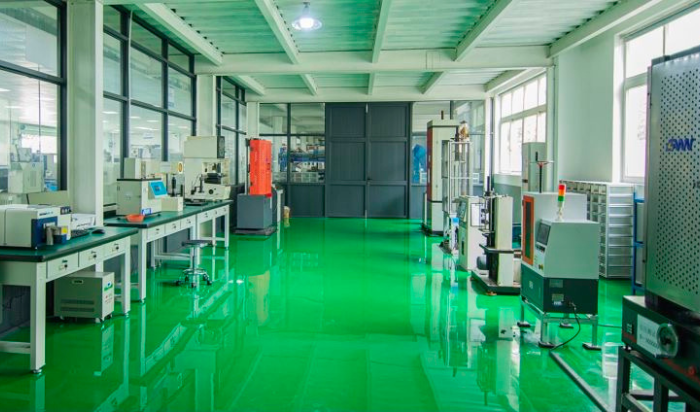
As a leading spring manufacturer in Shanghai, China, GL Springs adheres to strict quality control (QC) standards throughout the production process. Our comprehensive QC team ensures every compression spring, torsion spring, tension spring, and custom wire forming product meets international standards and customer requirements for precision, durability, and performance.
Our Quality Control Philosophy
At GL Springs, quality is the foundation of our business. We implement a "total quality management" (TQM) approach, covering raw material inspection, in-process testing, finished product verification, and after-sales tracking. Our QC team is dedicated to delivering consistent, high-quality springs for automotive, electronics, medical, and industrial applications.
Comprehensive Quality Control Process for Springs
From raw material incoming to finished product delivery, every step is under strict quality supervision to ensure zero defects and reliable performance.
1. Raw Material Inspection (Incoming Quality Control - IQC)
We only source high-quality materials from certified suppliers, including stainless steel (304, 316, 316L), carbon steel (SWC, SWP), alloy steel, and phosphor bronze. Our IQC process includes:
-
Material composition analysis (using spectral analysis equipment) to ensure compliance with ASTM, DIN, JIS, and GB standards.
-
Mechanical property testing (tensile strength, elasticity modulus) to guarantee material durability for spring manufacturing.
-
Corrosion resistance pre-test (salt spray test for stainless steel materials) to prevent rust and oxidation issues.
All raw materials are documented with batch numbers and test reports for traceability.
2. In-Process Quality Control (IPQC)
During spring production, our IPQC team conducts real-time inspections to ensure dimensional accuracy and manufacturing precision. Key checks include:
-
Dimensional inspection: Wire diameter, outer diameter, free length, leg length (for torsion springs), and hook dimensions (for tension springs) are tested with CNC measuring tools, ensuring tolerance ≤ ±0.01mm.
-
Forming precision: Monitoring of spring coiling, bending (for wire formings), and heat treatment processes to avoid deformation.
-
Torque & load testing: Real-time torque testing for torsion springs (tolerance ≤ ±5%) and load testing for compression/tension springs to ensure performance meets customer requirements.
Every production batch is sampled and tested.
3. Finished Product Quality Control (FQC)
Before delivery, all finished springs undergo 100% inspection to eliminate defects. Our FQC process includes:
-
Visual inspection: Checking for surface defects (scratches, burrs) and coating quality (zinc plating, nickel plating, passivation).
-
Performance testing: Fatigue life test,salt spray test (240-720 hours for corrosion resistance), and torque/load verification.
-
Packaging inspection: Ensuring proper packaging to prevent damage during transportation, with batch labels and test reports included.
Only products that pass all FQC checks are allowed to be shipped to customers.
4. Outgoing Quality Control (OQC) & After-Sales Tracking
Our quality control does not end with delivery. We conduct OQC checks on packaging, shipping documents, and product quantity. Additionally, we track customer feedback and conduct periodic product performance reviews to continuously improve our quality system.
Quality Certifications & Advanced Testing Equipment
GL Springs is certified by international quality standards, ensuring our quality control system meets global requirements for spring manufacturing:
-
ISO 9001: 2015 Quality Management System Certification
-
IATF 16949: 2016 Certification (for automotive-grade springs)
-
RoHS & REACH Compliance (for electronics and medical applications)
-
Compliance with DIN, ASTM, JIS, and GB spring standards
To support our quality control process, we invest in advanced testing equipment, including:
-
CNC measuring instruments (dimensional accuracy testing)
-
Spring fatigue testing machines (service life verification)
-
Salt spray testing equipment (corrosion resistance testing)
-
Torque testing machines (torsion spring performance testing)
-
Spectral analysis equipment (raw material composition testing)