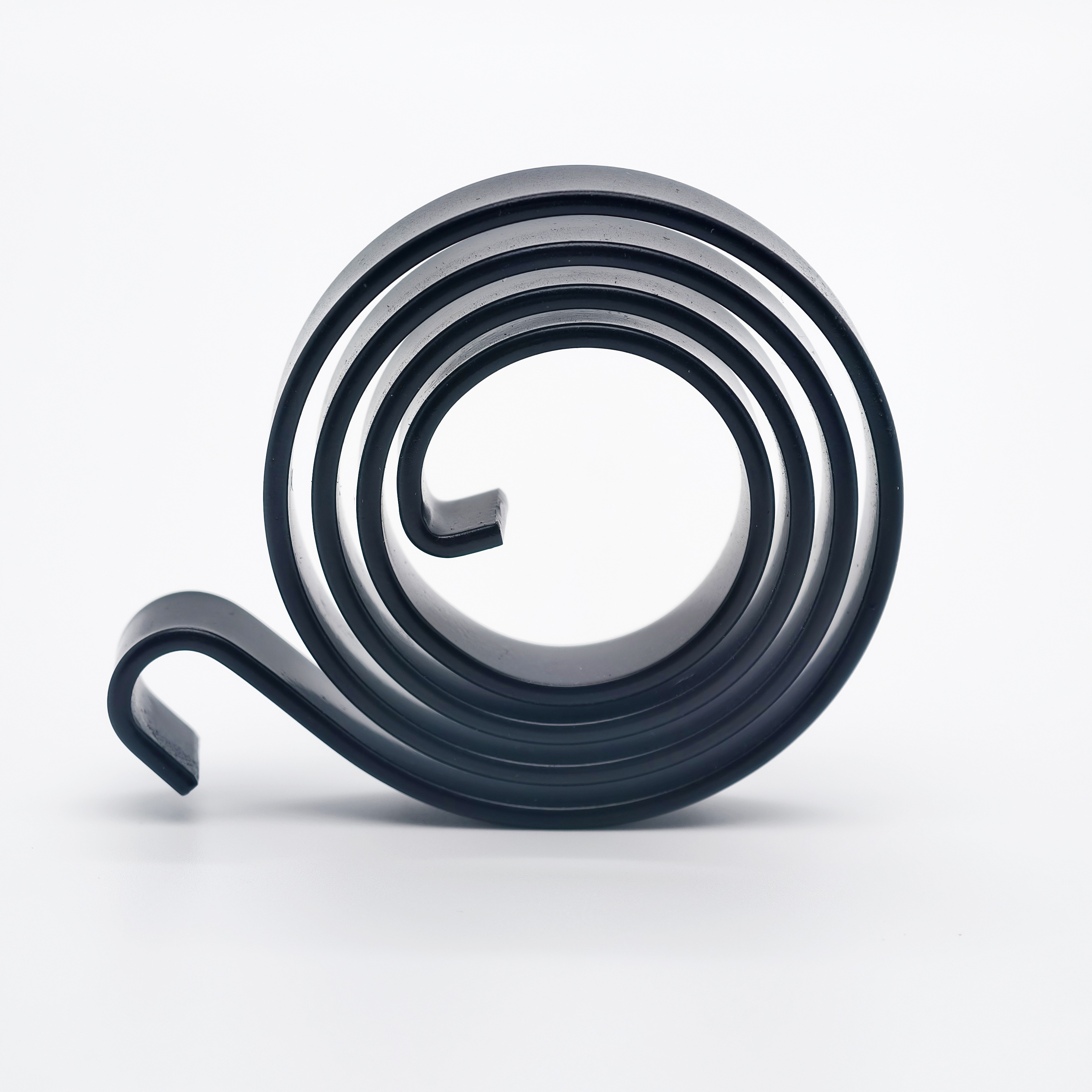
"This project is also available as a condensed case study: [3× Fatigue Life with 17-7 PH Springs]. Below, the full engineering story."
When standard 301 stainless couldn’t meet the fatigue-life target for an automotive customer’s device, our engineers specified 17-7 PH (1.4568 / EN 10270-3) with a tailored heat-treatment process — tripling fatigue life and helping the customer’s equipment pass FDA certification.
Not every spring problem is solved by “make it bigger.” Sometimes the answer is the right material and the right heat treatment. Here’s a real project where material engineering — not just manufacturing — made the difference between a spring that failed early and one that enabled a long-term partnership.
An automotive customer came to us with a high-cycle application that demanded exceptional fatigue life. Their device would see millions of load cycles in service, and the spring was a critical component — if it fatigued and failed, the whole unit would be compromised.
Their initial specification called for standard SUS 301 stainless steel. On paper it looked reasonable: 301 offers good strength and corrosion resistance. But when we reviewed the duty cycle and stress levels, our engineers flagged a problem: standard 301 would not reliably meet the fatigue-life requirement for this application. It would work at first — then risk failing well before the target service life.
301 stainless gains strength through cold working, and it’s a solid general-purpose spring material. But for this customer’s stress amplitude and cycle count, the fatigue margin was simply too thin. Pushing 301 to meet the target would have meant compromises elsewhere — larger wire, more space, or accepting a shorter service life. None of those were acceptable to the customer.
This is exactly the kind of issue that’s cheap to catch during design review and very expensive to discover in the field.
Rather than force-fit the original material, our engineers proposed a different approach: 17-7 PH precipitation-hardening stainless steel — material number 1.4568, grade 631, to EN 10270-3 (the European standard for stainless spring wire).
17-7 PH is a precipitation-hardening grade that can be heat-treated to significantly higher strength than 301 while retaining corrosion resistance. But the material alone wasn’t the whole answer — the key was a tailored precipitation-hardening heat-treatment process developed for this spring, optimizing strength and fatigue resistance for the customer’s specific duty cycle.
We combined:
The redesigned spring delivered a 3× improvement in fatigue life compared with the original 301 specification. That wasn’t a marginal gain — it moved the spring from “at risk of early failure” to comfortably exceeding the service-life target.
The impact went beyond the spring itself:
If you have a high-cycle, high-stress, or fatigue-critical requirement — or a spec that isn’t quite meeting its target — our engineers can review it and recommend the optimal material, heat treatment, and design.
GL Springs (Shanghai Guanglei Spring Co., Ltd.) is an IATF 16949–certified custom spring manufacturer in Shanghai, China, combining precision manufacturing with in-house material and heat-treatment engineering to solve demanding spring challenges for OEMs worldwide since 2005.